


Introduction
Retired electric vehicle (EV) batteries and damaged battery packs present growing challenges for battery recyclers and waste management companies. Different battery chemistries, complex pack structures, residual electrical energy, and potentially hazardous internal components make battery recycling more demanding than conventional waste size reduction.
A suitable lithium battery recycling machine must do more than reduce material size. It should be selected according to battery condition, material characteristics, processing capacity, safety requirements, and the downstream recycling process.
SOYU Machinery provides industrial shredding equipment and customized recycling systems for different solid waste and resource recovery applications. This guide explains the role of battery shredding equipment, the factors to consider when selecting a lithium battery recycling system, and how customized solutions can support battery recycling projects.
What Is a Lithium Battery Recycling Machine?
A lithium battery recycling machine is equipment used in the mechanical pretreatment or processing of lithium-ion batteries and battery packs for material recovery. Depending on the system design, the equipment may be used to reduce material size and prepare battery-derived materials for subsequent separation and recovery processes.
Lithium battery recycling systems can be configured for different feed materials, including selected retired EV battery packs, battery modules, and other lithium-ion battery materials that have been assessed as suitable for the intended process.
The exact equipment configuration depends on battery chemistry, pack construction, dimensions, physical condition, residual energy risks, required throughput, and the desired downstream process.
A battery shredding machine is one possible component of a larger recycling line. It should not be confused with a complete recycling plant, which may also require discharge or electrical isolation procedures, dismantling equipment, material separation, environmental controls, and further processing equipment.
Why Is Battery Pack Shredding Challenging?
Battery packs differ significantly from ordinary industrial waste. Their internal structures may include metal housings, plastic components, wiring, electronic parts, and interconnected battery cells. These materials behave differently during mechanical processing.
1. Different Battery Chemistries and Pack Designs
Lithium iron phosphate (LFP) and ternary lithium batteries have different material compositions and application characteristics. Battery packs also vary in size, enclosure design, internal connections, and structural strength.
Before selecting a lithium battery recycling machine, recyclers should identify the incoming battery types and determine which materials the proposed process is designed to handle.
2. Damaged and Swollen Battery Packs
Retired batteries may be intact, damaged, swollen, or partially dismantled. Damaged batteries can present additional risks, including internal short circuits, thermal runaway, and fire.
Battery condition assessment and appropriate upstream safety procedures are therefore essential. Damaged or swollen battery packs should not be fed into shredding equipment without a professionally established handling and processing procedure.
3. Dust, Electrolyte Vapors, and Environmental Control
Mechanical processing may generate dust and release potentially hazardous substances, depending on the battery condition and process conditions. Electrolyte-related emissions and other process gases must also be evaluated.
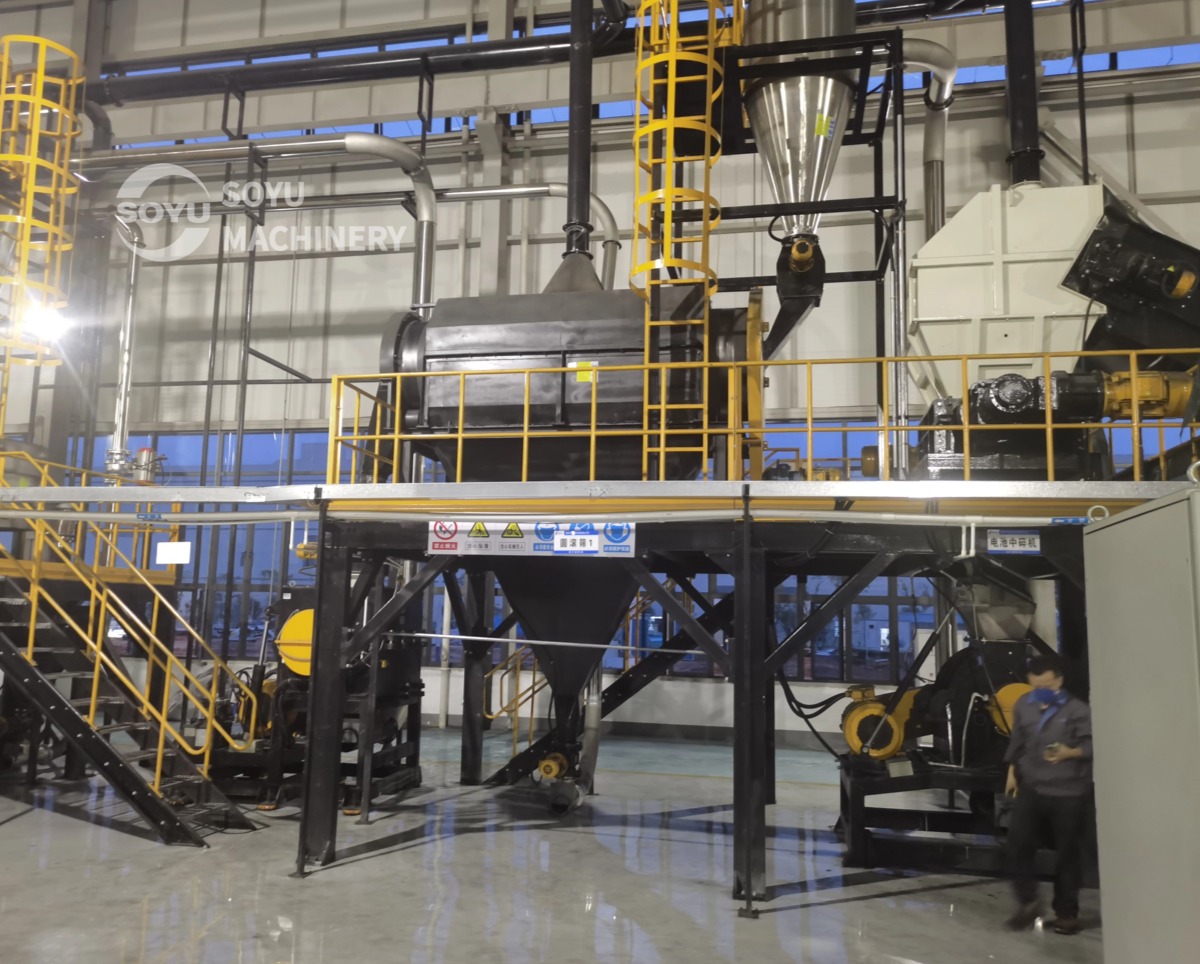
A properly engineered battery recycling line may incorporate enclosed processing equipment, negative-pressure control, dust collection, and exhaust gas collection or treatment. The specific configuration should be determined through process engineering and an assessment of the materials being handled.
4. Stable Operation and Downstream Material Recovery
Battery packs contain a mixture of materials with different physical properties. Effective pretreatment must consider not only size reduction but also the requirements of subsequent separation and recovery stages.
The target particle size, equipment arrangement, and material transfer method should be evaluated together to support the intended recycling process.
Key Features to Consider When Selecting Battery Recycling Equipment
Choosing a lithium battery recycling machine requires a project-specific evaluation rather than relying on a single equipment specification.
Enclosed Shredding and Negative-Pressure Design
For suitable battery pretreatment applications, enclosed shredding can help contain process materials. A negative-pressure system, when properly engineered, can help control the movement of airborne contaminants.
However, enclosure and negative pressure alone do not eliminate all battery-related hazards. The complete design must account for potential fire, thermal runaway, gas generation, and other risks identified through the project safety assessment.
Explosion-Protection and Safety Measures
Battery recycling equipment should be evaluated according to the hazards associated with the actual feed materials and operating conditions. Depending on the risk assessment, the system may require appropriate explosion-protection measures, temperature monitoring, fire detection or suppression, emergency shutdown functions, and other safeguards.
These measures must be selected and validated for the specific application. Buyers should request relevant technical documentation rather than assuming that every battery recycling machine offers the same level of protection.
Dust Collection and Exhaust Gas Management
Environmental control is an important consideration when designing a battery recycling production line.
Depending on the process, the system may integrate dust collection, exhaust gas collection, and suitable treatment equipment. Airflow, filtration, gas treatment, monitoring, and maintenance requirements should be assessed as part of the overall system design.
Environmental impact assessment and emissions compliance depend on the complete project, including the process, installed equipment, operating conditions, and applicable local regulations.
Customized Capacity and Equipment Configuration
Processing capacity should be determined using realistic feed conditions, operating hours, battery dimensions, and material characteristics. A machine's nominal capacity does not necessarily represent the achievable throughput of a complete battery recycling line.
Providing representative material information, expected daily throughput, and target output requirements allows the equipment supplier to evaluate a more appropriate configuration.
How to Choose a Lithium Battery Recycling System
Before requesting a quotation, battery recycling companies should prepare the following information.
1. Battery type: Identify whether the project involves LFP batteries, ternary lithium batteries, or other lithium-ion battery types.
2. Battery condition: Describe whether the incoming materials are intact, damaged, swollen, dismantled, or mixed. Explain the proposed inspection, isolation, and upstream handling procedures.
3. Feed dimensions and structure: Provide battery pack dimensions, housing materials, and available information about the internal structure.
4. Required processing capacity: Specify the expected throughput in kilograms or tonnes per hour, together with the anticipated operating schedule.
5. Downstream recovery process: Explain whether the project requires preliminary size reduction, material separation, or integration with a larger recycling line.
6. Safety and environmental requirements: Identify applicable local regulations, project environmental assessment requirements, emission-control needs, and site-specific safety considerations.
With these details, suppliers can evaluate equipment compatibility, system layout, auxiliary equipment, and potential integration requirements more accurately.
SOYU Lithium Battery Recycling Solutions
SOYU Machinery manufactures industrial shredders, crushers, and customized solid waste recycling systems. For battery recycling projects, equipment selection and line configuration should be based on the characteristics of the battery materials and the requirements of the intended process.
A customized solution may integrate shredding equipment with enclosed processing, dust collection, exhaust gas collection, and other auxiliary systems, subject to project-specific engineering and safety assessment.
SOYU can evaluate project requirements such as material type, processing capacity, feed dimensions, plant layout, and downstream separation needs to help determine a suitable equipment configuration.
For projects involving retired EV batteries, damaged battery packs, or other lithium-ion battery materials, a technical assessment is an important first step before equipment selection and installation.
To discuss your requirements, contact SOYU Machinery through the official website:


Frequently Asked Questions
What is the difference between a lithium battery recycling machine and a battery shredding machine?
A lithium battery recycling machine is a broad term that may refer to equipment used at different stages of battery recycling. A battery shredding machine specifically performs size reduction. A complete recycling system may include additional handling, separation, environmental control, and downstream recovery equipment.
Can one machine process both LFP and ternary lithium battery packs?
This depends on the machine design, battery pack structure, material condition, and approved operating procedure. Compatibility should be confirmed through a technical evaluation of the actual feed materials and the intended process.
Can damaged or swollen battery packs be shredded directly?
Not without an appropriate professional assessment and established safety procedures. Damaged and swollen batteries may present elevated fire and thermal runaway risks. Their handling, isolation, and processing must follow a suitable risk assessment and applicable regulations.
What environmental control systems may be needed?
Depending on the process and local requirements, a battery recycling line may need enclosed processing, negative-pressure control, dust collection, exhaust gas collection or treatment, and appropriate monitoring systems. The final configuration should be determined through project engineering and environmental assessment.
How do I choose the right battery recycling equipment capacity?
Start with the expected feed volume, battery dimensions, material condition, operating hours, and downstream process requirements. The supplier should evaluate these factors together rather than selecting equipment based on nominal capacity alone.
Does SOYU provide customized battery recycling solutions?
SOYU provides industrial shredding equipment and customized recycling system configurations. For battery recycling applications, the proposed equipment and auxiliary systems should be assessed against the specific materials, project capacity, safety requirements, and downstream processing objectives.
Conclusion
Selecting a lithium battery recycling machine involves more than comparing motor power or throughput. Battery chemistry, pack condition, mechanical processing requirements, safety engineering, environmental controls, and downstream material recovery all influence the final equipment configuration.
By defining these requirements before purchasing, battery recyclers can make more informed equipment decisions and develop a recycling process suited to their project.
SOYU Machinery provides customized industrial shredding and recycling equipment solutions based on material characteristics and processing requirements. Contact SOYU to discuss your lithium battery recycling project.

