


Introduction: A heavy-duty single shaft shredder turns bulky solid waste into controlled particle sizes before sorting, fuel preparation, or secondary processing.
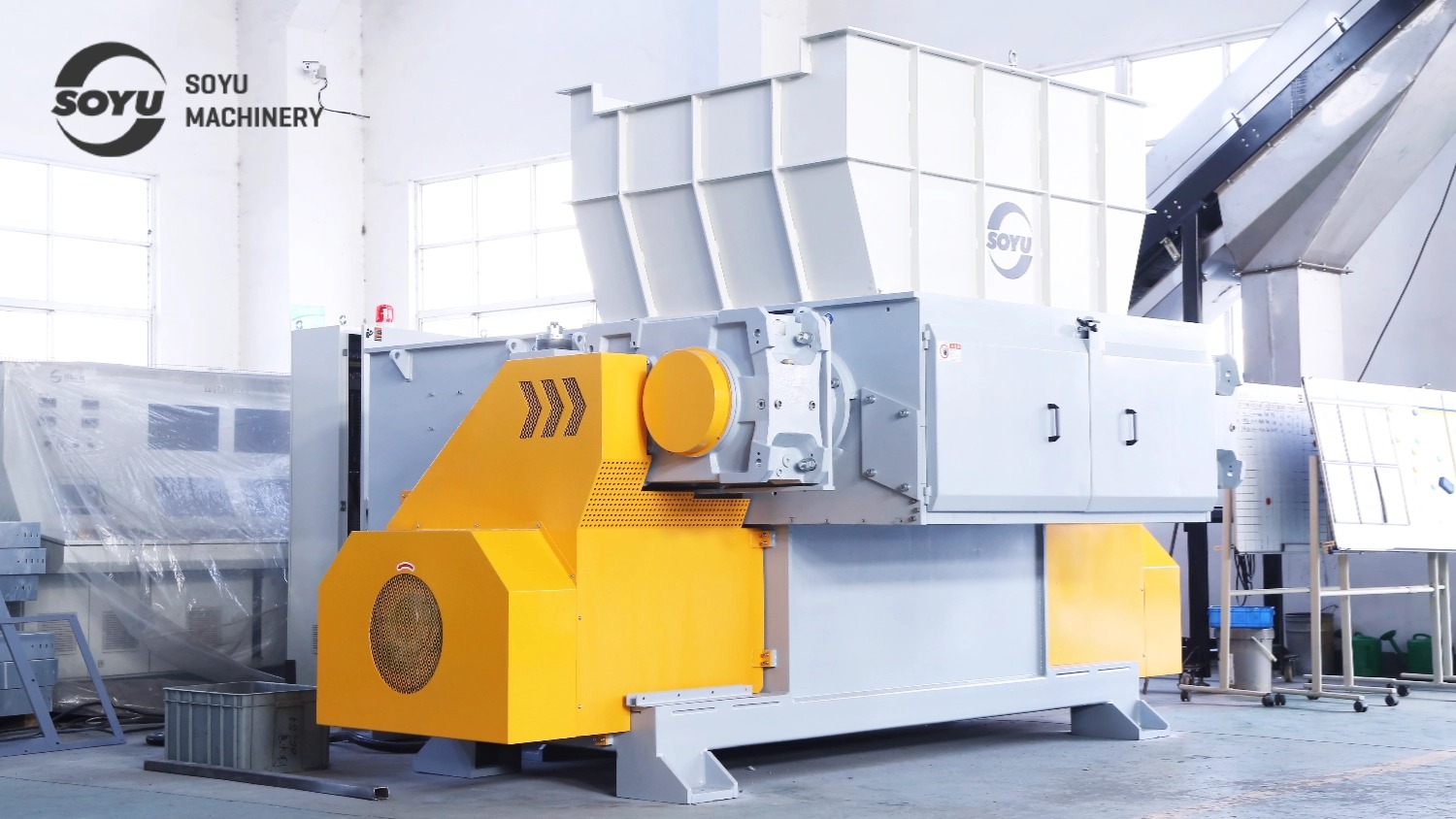
In a solid waste line, the shredder is not just a size-reduction box. It is the stage that changes material shape, bulk density, and feed consistency. Readers learning how industrial waste processing works often meet terms like primary shredder, secondary shredder, crusher, and granulator in the same paragraph. The differences matter because each machine solves a different problem. this guide follows the basic sequence inside a heavy-duty single shaft shredder: material feeding, hydraulic ram pushing, rotor shearing, and screen-controlled discharge. That sequence explains the machine's role in a reduction line and what feed conditions it expects before a secondary shredding stage.
Why Solid Waste Reduction Needs a Dedicated Shredding Stage
Solid waste is not a uniform material. Mixed industrial waste can contain film, woven bags, cardboard, wood, textile scraps, light aluminum, FRP, e-waste, and other items in one load. General crushing equipment is often built around brittle, relatively predictable feed like minerals, coal, or stone. A dedicated shredding stage is designed for irregular, bulky, and sometimes flexible material. Its job is to reduce volume and create a more manageable particle size before sorting, densification, fuel blending, or disposal. The US EPA's waste management hierarchy places material recovery and recycling above disposal, and mechanical size reduction supports those higher-value pathways by preparing waste for separation and reuse. Volume reduction also has practical effects. Trucks, conveyors, and storage bunkers handle smaller pieces more predictably. Downstream screens, magnets, eddy current separators, and air classifiers work better when the feed is opened up and less tangled. A single shaft shredder does not replace sorting or recycling. It creates the physical conditions that let those steps work. That is why waste lines often use a dedicated shredding stage instead of sending raw waste straight to a baler, furnace, or granulator.
How the Ram, Rotor, and Screen Work Together
The shredding action is a continuous sequence, not a single spinning blade. Material enters the cutting chamber. A hydraulic ram pushes it toward a rotating rotor. Rotor cutters pass fixed cutters and shear the material. Pieces that fit through the screen leave the chamber; oversized pieces stay in the cutting zone until they are reduced. This sequence explains why feed control, rotor design, and screen choice are linked. A machine can have strong motors and still perform poorly if the ram cannot keep the material against the rotor, or if the screen creates a mismatch between output size and material behavior.
1. The Hydraulic Ram Feeds Material Toward the Rotor at a Controlled Rate
The interior hydraulic ram is the feeding mechanism. Instead of letting light or springy material bounce in the hopper, the ram pushes it into the rotor zone at a controlled rate. For film, woven bags, textile scraps, and mixed paper, this steady push matters because these materials tend to bridge, wrap, or ride on top of the rotor. An interior ram also keeps the feed compact, so the rotor sees a more consistent cutting load. In the SRD series, the ram works with a torque limiter. If an uncrushable item causes a sudden overload, the torque limiter releases the drive connection to protect the gearbox and motor. That protection is a practical part of heavy-duty operation, not an extra feature.
2. The Screen Sets the Upper Limit for Discharged Particle Size
The screen is the size gate. Rotor cutters shear material until pieces are small enough to pass through the screen apertures. The SRD series uses replaceable 40-100 mm screen apertures, and the screen frame can open hydraulically for access. A smaller aperture produces finer output but can slow passage, especially with wet, tough, or high-density material. A larger aperture speeds discharge but leaves larger pieces. Screen choice therefore connects directly to what happens downstream. A line preparing material for a secondary shredder or a sorting stage may use one aperture, while a line feeding a baler or furnace may need another. Rotor speed, controlled by a VFD on the SRD series, adds another adjustment point: slower rotation can increase torque at the cutters, while higher speed can improve throughput for lighter material.
How Single Shaft Shredding Prepares Material for Downstream Sorting or Fuel Use
In many facilities, the heavy-duty single shaft shredder works as a secondary shredder. Material has already passed a primary coarse shredding stage or a pre-sort. The feed arriving at this stage is irregular: mixed MSW, RDF feedstock, plastic lumps, film and woven bags, wood pallets, paper and cardboard, leather and textile scraps, light aluminum and UBC, glass fiber and FRP, and e-waste. The machine opens these materials and reduces them to a controlled range. The goal is not one perfect particle shape. The goal is a feed that downstream equipment can handle without wrapping, bridging, or overloading. Feed conditions before a secondary shredding stage matter just as much as the machine itself. Oversized solid steel, engine blocks, and similar dense metal pieces are outside the intended material range; SRD metal processing is limited to light aluminum and UBC. Moisture, density, toughness, and screen aperture all affect real throughput. The SRD series has a design maximum theoretical throughput of up to 30 t/h under specific material conditions, so it is best understood as a design ceiling rather than a constant rate for every waste stream. When the feed is within range, the shredder prepares material for air classification, magnetic separation, screening, densification, or fuel blending. As a category, it is a preparation machine: it makes downstream recovery and fuel use more predictable. SOYU Shredder's SRD series applies this category with an interior hydraulic ram, surface-hardened rotor, hydraulic-open screen, and replaceable apertures, and its design and manufacturing practice follows ISO 9001 and CE requirements.
Conclusion
A heavy-duty single shaft shredder earns its place in solid waste reduction by controlling the feed, shearing material against fixed cutters, and discharging it through a screen. That combination separates it from general crushing equipment. General crushers reduce brittle feed; a heavy-duty single shaft shredder prepares mixed, bulky, and often flexible waste for the next step. The useful way to judge the machine is to follow the sequence: can the ram keep material moving, can the rotor shear it without stalling, and can the screen deliver the particle size the downstream line needs? That sequence is also a better basis for talking with a single shaft shredder manufacturer or industrial shredder machine supplier than a simple motor-power comparison. Readers who want to see how one product family applies that sequence can review the SRD series page for its ram, rotor, screen, and material range.
FAQ
Q:What is a heavy-duty single shaft shredder used for in solid waste processing?
A:It is used for volume reduction and particle-size preparation. It takes mixed, bulky, or flexible solid waste and reduces it before sorting, densification, fuel blending, or secondary shredding. Typical feeds include MSW/RDF, plastics, film and woven bags, wood pallets, paper and cardboard, leather and textile scraps, light aluminum and UBC, glass fiber and FRP, and e-waste. It is not a general crusher for solid steel or engine blocks.
Q:How does a hydraulic ram improve material feeding in a single shaft shredder?
A:The ram pushes material from the hopper into the rotor zone at a controlled rate. That keeps light, springy, or fibrous material from bridging or bouncing, and it gives the rotor a more consistent load. In heavy-duty designs, the ram also works with overload protection such as a torque limiter, so sudden jams are less likely to damage the drive train.
Q:Why does screen aperture size matter in solid waste reduction?
A:The screen decides the upper size limit of discharged material. Smaller apertures create finer output but can reduce passage rate for wet or tough waste. Larger apertures increase discharge speed but leave larger pieces. Choosing 40-100 mm apertures is therefore a process decision tied to downstream sorting, secondary shredding, or fuel use.
Sources / References
CPC Scheme - B02C CRUSHING, PULVERISING, OR DISINTEGRATING IN GENERAL; MILLING GRAIN
Sustainable Materials Management: Non-Hazardous Materials and Waste Management Hierarchy | US EPA
Regulatory and Guidance Information by Topic: Waste | US EPA

